William Harden
East of the MountainsWilliam Harden is a wolfhound breeder connected to the Wolfhound Orchard and the brother-in-law of Bea Harden. His dogs’ pursuit of animals and his possession of Ben Givens’s family shotgun bring him into direct conflict with Ben. Yet when Ben finally confronts him, the decisive change is Ben’s: he abandons his intention to take the gun back and offers it to Harden instead.
Identity and Introduction
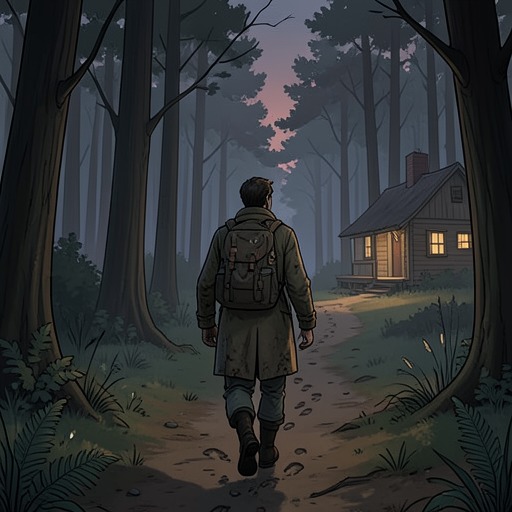
Harden enters the story first as the person Ben believes may be working among the apple pickers at the Wolfhound Orchard. On Joe Miller Road, Ben passes the orchard’s busy sidings, where workers transfer bins of apples and a tractor and forklift serve the harvest. The Hardens’ mailbox stands beside another siding. Ben wonders whether one of the workers might be the night rider who took his shotgun, though he has never seen the thief’s face. He associates Harden with sending wolfhounds after Coyotes, and expects that Harden might recognize him when they meet.
This first appearance is filtered through Ben’s purpose and uncertainty: Harden is a suspected thief whom Ben has come to find, but the identification has not yet been confirmed. Ben recognizes that the day has become a prolonged delay; he now regards himself as back on course and intends to find Harden after resting. The orchard setting makes the search part of a working landscape, with the harvest underway around the unresolved personal dispute.
Family Connection and Reputation
Bea clarifies Harden’s place in her family when Ben asks whether her husband is named William. She answers that William is her brother-in-law. She also confirms that he raises wolfhounds. These exchanges establish a connection between Bea and Harden without implying that she shares or supports his conduct.
Bea describes Harden as a local terror whose actions do not surprise her. When Ben calls him a varmint hunter, she indicates that this description understates the problem. She says that Harden sends his hounds after anything that moves. The account is Bea’s assessment, not Harden’s own explanation of his behavior, but it gives the conflict a broader scope than a single encounter between two hunters: in her view, his dogs are not confined to pursuing Coyotes.
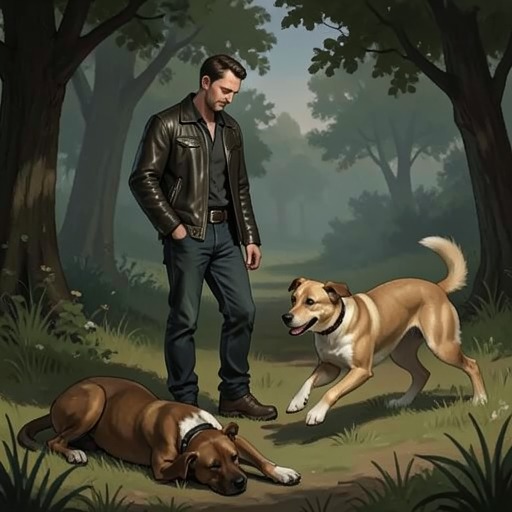
Ben connects that practice to what happened to his own Brittany dogs: Harden’s hounds killed one and left the other maimed. Ben adds that he killed the hound that went after his dogs. Bea responds with regret that Harden does not have another hobby. The exchange presents a chain of retaliatory violence, while leaving Harden’s response to those particular events unstated.
Confrontation at the Orchard
When Harden arrives, he is a large man in his fifties, dressed for work in suspenders, a sweatshirt, logging jeans, and worn boots. He carries a power drill, a carpenter’s belt, and a bag of nails, and is walking toward a maintenance shed when Ben calls to him. The scene places him amid practical work rather than staging him as a figure already prepared for a fight. His attention turns to Ben, and his first response is to ask what is going on.
Ben identifies himself as the hunter whose Winchester Model 21 shotgun Harden took a few nights earlier. Harden disputes Ben’s description of the taking, saying that calling it theft is not right. The exchange confirms that Ben’s suspicion was correct, but it does not supply Harden’s account of how he acquired the gun or why he kept it. His brief objection remains the only explanation he offers in the confrontation.
Ben says that he came to get the gun back but has changed his mind. He explains that the shotgun had been in his family for sixty years, used first by his father and then by Ben to hunt birds. Rather than treat its long family history as a reason to reclaim it, Ben judges the weapon as a bad thing. He then tells Harden that all guns are cursed and offers to pass the shotgun to him, saying he wants to wash his hands of it. Harden does not answer this declaration; when Ben moves closer and removes his glasses, Harden raises the drill. The moment records a wary physical response, not a stated acceptance or refusal of the gun.
Narrative Role and Outcome
Harden’s importance lies in how he concentrates the book’s conflict over hunting, retaliation, and the meaning of a family weapon. His wolfhounds are associated with pursuit and harm to Ben’s dogs; Ben, in turn, has killed one of Harden’s hounds. The dispute over the shotgun extends that conflict beyond the animals. Its history links it to Ben’s father and to Ben’s own bird hunting, while Ben’s decision to relinquish it turns the encounter away from recovery and toward renunciation.
The ending does not establish what Harden does with the offered shotgun. After Ben makes his choice, Bea drives him upriver, and the narrative follows their journey rather than reporting a further exchange between the two men. Harden therefore remains a sharply bounded character: his family connection, reputation, dogs, work, and contested possession of the gun are shown, but his private motives and subsequent actions are not. The uncertainty matters. Ben can decide to stop carrying the weapon’s history, but the text does not claim that Harden has changed or that the cycle of violence has been resolved.